
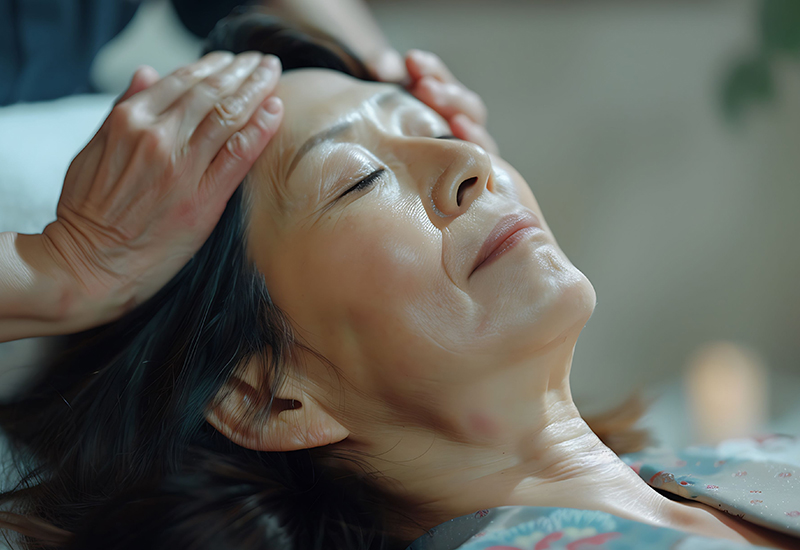
If your skin suddenly feels like it’s changed overnight, you’re not imagining it.
During the menopause, skin undergoes a number of changes which everyone can experience differently. One day, your usual moisturiser leaves you glowing, the next, it just sits there. Menopausal skin feels thinner, tighter, or even oily in patches. Makeup doesn’t land the same and familiar formulas suddenly sting.
It’s frustrating, unpredictable and can feel like your skin has stopped playing by its own rules. But here’s the truth: your skin hasn’t given up on you. It’s simply evolving and with the right understanding, you can evolve with it.
The Role of Oestrogen in Menopausal Skin Changes
The main changes in your skin during the menopause are caused by changes in a hormone called oestrogen. Oestrogen has been present as a hormone within your body since puberty, fluctuating as part of your menstrual cycle. Usually our oestrogen levels peak at around the age of 25, dropping slightly in our 30s and more significantly in our 40s are we approach the menopause.[1] As oestrogen levels start to decline during perimenopause and the menopause itself, your skin undergoes a series of natural changes due to oestrogen playing a vital role in supporting collagen, elastin and hydration levels.
The Menopause and Collagen Production
During this time, collagen and elastin production can slow down, leading to less firmness and volume. It’s reported that collagen production decreases at a rate of 2.1% each year in the 15 years that follow menopause, which means an average of a 30% decrease in collagen between the ages of 50 and 65.[1] This loss in collagen can leave your skin looking and feeling thinner, drier and in some cases more wrinkled.
How Hyaluronic Acid Helps Combat Dry Skin in Menopause
Declining oestrogen levels reduce production of hyaluronic acid and ceramides in the skin, molecules which help to retain water and keep your skin’s barrier strong. A key concern associated with menopause is skin dryness, as the skin barrier can struggle to adapt straight away to hormonal changes within the skin. A survey of 3,875 postmenopausal women over 40 showed that 36.2% suffered from dry skin.[2]
A lack of ceramides and drier skin can also trigger new sensitivities, including irritation and itchy skin during menopause. So, many women find their skin is more sensitive than it was before.
The Menopause and Testosterone
In some people, testosterone fluctuations during the menopause can cause an increase in oil production, which can sometimes trigger new breakouts.[3] This can occur even if you have never experienced breakouts before; sadly it’s a myth that spots disappear once you enter your 20s.
When these hormonal shifts start to occur, the effects become visible on the skin. The key is not to think of these shifts as a loss, but as a recalibration. Your skin is adapting and the right ingredients can help it thrive again.
Talk to your therapist about the best way to Care for Skin Through Menopause. Book an appointment at Velour Skin & Beauty Palour